Queen's Orchard Header Image

Showing posts with label wildlife. Show all posts

Tuesday, 25 April 2017

Tea fertilisers


Do you fancy a cup of tea?
Of course your plants would. But it has to be a special "tea" and it won't be served in a cup!
Studying organic matters and nutrients I came across "tea fertilisers", liquid fertiliser (power boost) that can be easily homemade for free.

The first one I have tried to make is the Nettle Tea Fertiliser.
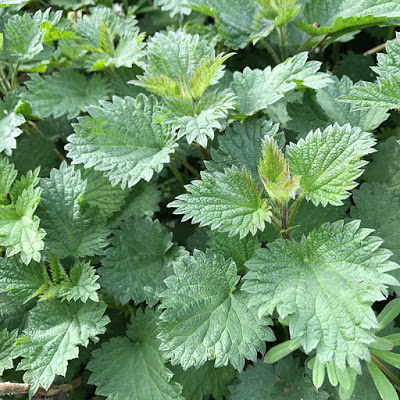
As the name can suggests, you need nettle (Urtica dioica),  and you need gloves to pick it up!
Despite the very unpleasant nature of this weed, it has three strong points on its side:

  1. It's rich in Nitrogen, useful element for growth of vegetative parts and photosynthesis.
  2. It can be a delicious ingredient for your meal (maybe I can write a post about it).
  3. And ...it is free and very common to find!

So all you need is 1Kg of Nettle's leaves per 1L of Water.
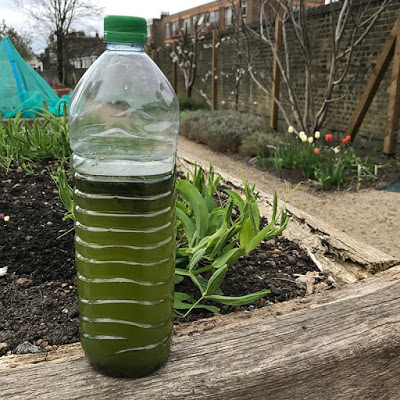
Put your nettle into a container full of water and let it rot for two weeks, stir every few days. It will smell very bad, DO NOT keep it inside the greenhouse as the smell  is really bad (evil, seriously!), but remember: No pain, no gain!
When it is ready, dilute 1:10 (nettle mix to water) in your watering can and use to watering your vegetable bed every two week.

The second recipe is the Comfrey Tea Fertiliser.
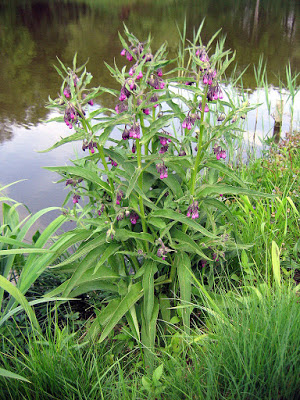
Comfrey - Source: Wikipedia

Comfrey (Symphytum officinale) is generally harder to find than nettles, it grows in damp, grassy places, it can be invasive, but it can also attract pollinators bees. This plant is also rich in Potassium: excellent for stimulating flowers and fruits.
At the moment I haven't seen any comfrey at the Queen's Orchard, so I will look for some Borage: they share the same family and possibly almost the same nutrient potential.
Doses and time of usage are the same of the Nettle's tea:
1Kg of Comfrey's leaves per 1L of Water.

When the tea is "ready", it need to be diluted 1:15 with your watering water.
Both these "tea" are fast release fertilisers, that means nutrients are available for the plant right away, but they loose their efficacy in little over two weeks and cannot be stored for a long time, so the best thing to do is making just the right amount on regular basis.

I've just used my Nettle fertiliser once, I will let you know the results eventually.
Have you tried any of these teas for your plants? Have you seen any improvements? Let me know in the comments below!

Thursday, 16 March 2017

Waiting for the spring time.

A new year of growing and harvesting is starting, but the activities at the Orchard never really stopped even during the winter.
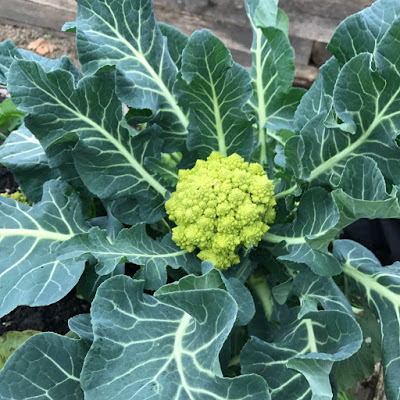
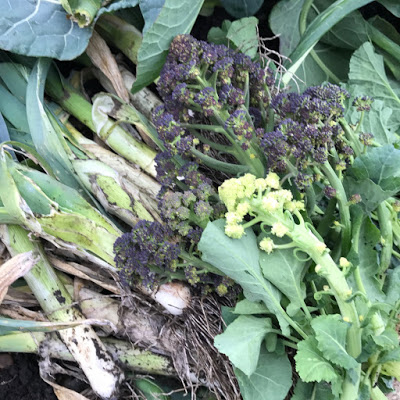
Sprout broccolis and Roman cauliflowers planted last autumn under the net and protected from pigeons have grown beautifully during the winter, and now they are ready to be harvested.
Same for the leeks planted last summer: they may not be as big as the ones you buy at the supermarket, but they are very tasty and... well, very smelly: simply delicious!
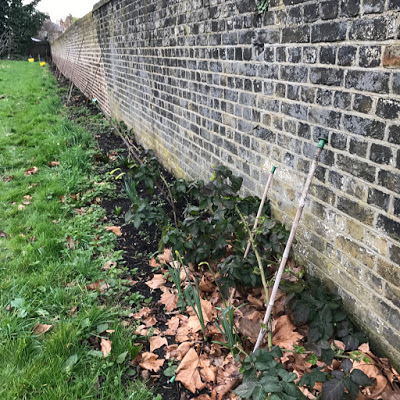
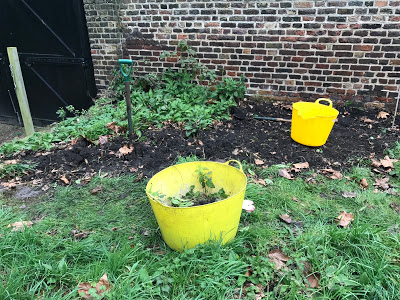
Volunteers have been working hard since last summer digging and cutting all the overgrown weeds that were covering the north wall of the orchard.

North wall: Before (July 2016) and After (March 2017)


North wall work in progress

The area is now tidy and nettle-free (at least we tried) , brambles that had been planted previously now have more room and light to develop flowers and fruits, improving garden's wildlife and providing more berries for us.

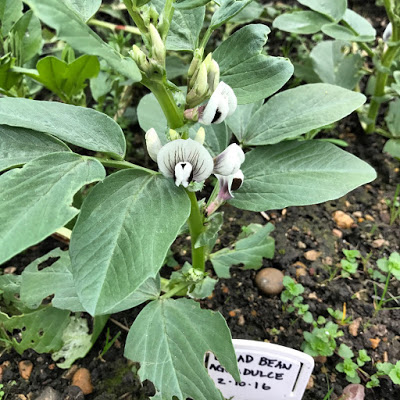
Daffodils, aubrieta, and violets have started to show up, but also broad beans "Aquadulce" planted last October in soil and just protected by a net are flowering.
Speaking of welcomed surprises, our garden coordinator Dorothy is back and that means the Queen's Orchard is now open to the public every Wednesday and week-end until October.
See you soon.


Thursday, 5 May 2016

Sunny May

Flowers are glorious in these sunny days of May, our purple Aubrieta spreads all over the flowers beds and beyond: it tends to loose its seeds on the ground so some new sprouts have grown directly on the gravel below the beds and near the benches.
Delicate Cherry tree flowers have appeared along the wall and a lot of other plants are getting ready for summer.

The weather has become warmer and warmer since the end of April, some of the vegetables we sowed in the greenhouse have suffered the high temperature and drought, while luckily others plants like courgettes and beans have coped very well and are ready to be set outside. 
Vegetables on the raised beds deserve some watering and weeding, early peas now ready for climbing need to receive stable support, while some of the spring onions and garlic are finally ready for harvesting.
The ducks in our pond seem to enjoy spending the days at the Orchard, can you see them hiding through the high grass?