Queen's Orchard Header Image

Showing posts with label vegetable. Show all posts

Tuesday, 25 April 2017

Tea fertilisers


Do you fancy a cup of tea?
Of course your plants would. But it has to be a special "tea" and it won't be served in a cup!
Studying organic matters and nutrients I came across "tea fertilisers", liquid fertiliser (power boost) that can be easily homemade for free.

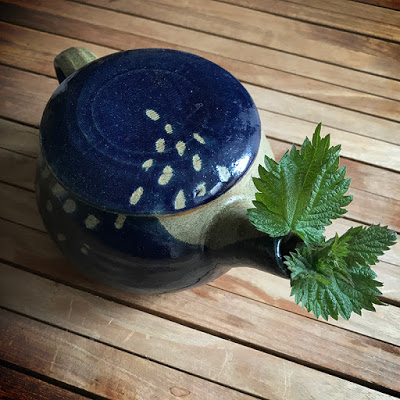
The first one I have tried to make is the Nettle Tea Fertiliser.
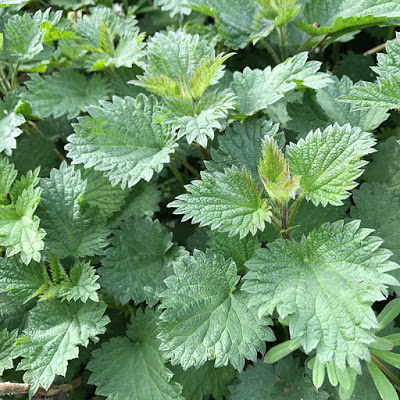
As the name can suggests, you need nettle (Urtica dioica),  and you need gloves to pick it up!
Despite the very unpleasant nature of this weed, it has three strong points on its side:

  1. It's rich in Nitrogen, useful element for growth of vegetative parts and photosynthesis.
  2. It can be a delicious ingredient for your meal (maybe I can write a post about it).
  3. And ...it is free and very common to find!

So all you need is 1Kg of Nettle's leaves per 1L of Water.
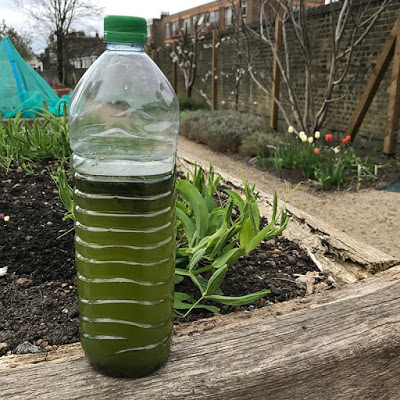
Put your nettle into a container full of water and let it rot for two weeks, stir every few days. It will smell very bad, DO NOT keep it inside the greenhouse as the smell  is really bad (evil, seriously!), but remember: No pain, no gain!
When it is ready, dilute 1:10 (nettle mix to water) in your watering can and use to watering your vegetable bed every two week.

The second recipe is the Comfrey Tea Fertiliser.
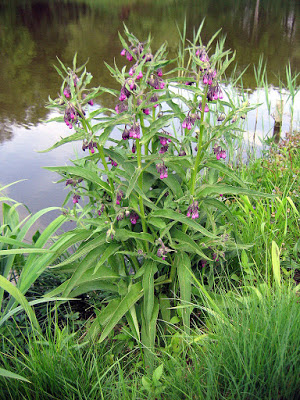
Comfrey - Source: Wikipedia

Comfrey (Symphytum officinale) is generally harder to find than nettles, it grows in damp, grassy places, it can be invasive, but it can also attract pollinators bees. This plant is also rich in Potassium: excellent for stimulating flowers and fruits.
At the moment I haven't seen any comfrey at the Queen's Orchard, so I will look for some Borage: they share the same family and possibly almost the same nutrient potential.
Doses and time of usage are the same of the Nettle's tea:
1Kg of Comfrey's leaves per 1L of Water.

When the tea is "ready", it need to be diluted 1:15 with your watering water.
Both these "tea" are fast release fertilisers, that means nutrients are available for the plant right away, but they loose their efficacy in little over two weeks and cannot be stored for a long time, so the best thing to do is making just the right amount on regular basis.

I've just used my Nettle fertiliser once, I will let you know the results eventually.
Have you tried any of these teas for your plants? Have you seen any improvements? Let me know in the comments below!

Thursday, 16 March 2017

Waiting for the spring time.

A new year of growing and harvesting is starting, but the activities at the Orchard never really stopped even during the winter.
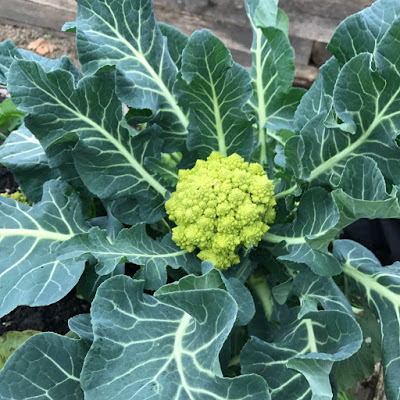
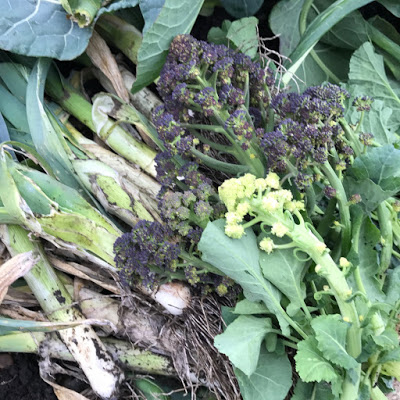
Sprout broccolis and Roman cauliflowers planted last autumn under the net and protected from pigeons have grown beautifully during the winter, and now they are ready to be harvested.
Same for the leeks planted last summer: they may not be as big as the ones you buy at the supermarket, but they are very tasty and... well, very smelly: simply delicious!
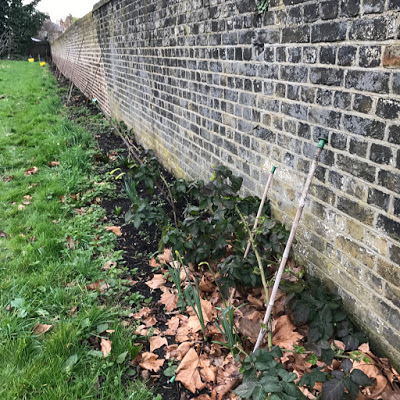
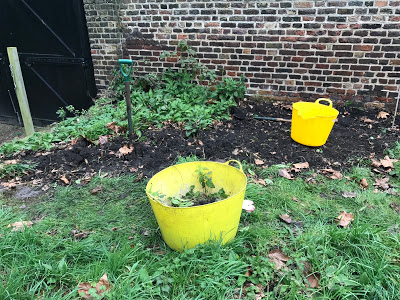
Volunteers have been working hard since last summer digging and cutting all the overgrown weeds that were covering the north wall of the orchard.

North wall: Before (July 2016) and After (March 2017)


North wall work in progress

The area is now tidy and nettle-free (at least we tried) , brambles that had been planted previously now have more room and light to develop flowers and fruits, improving garden's wildlife and providing more berries for us.

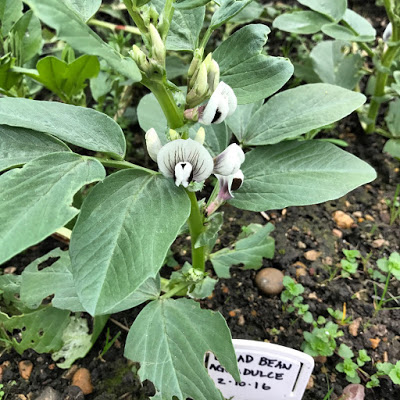
Daffodils, aubrieta, and violets have started to show up, but also broad beans "Aquadulce" planted last October in soil and just protected by a net are flowering.
Speaking of welcomed surprises, our garden coordinator Dorothy is back and that means the Queen's Orchard is now open to the public every Wednesday and week-end until October.
See you soon.


Wednesday, 7 September 2016

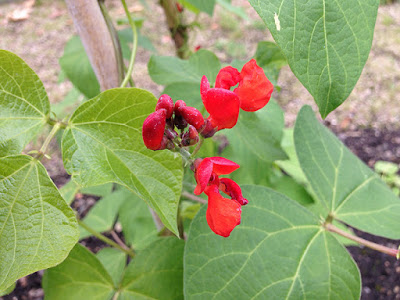
Three Sisters Planting System

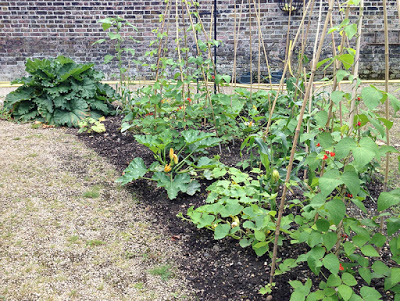
Do you know that growing sweetcorn, beans, and squashes in the same field, or in the same bed like at the Queen's Orchard, can help you get the best from your crops?
Pumpkin_02.jpg
This vegetable trio is known as the "Three Sisters System" or "Central America System"as these three plants are native to the New Continent and they are also strictly connected to the native american folklore representing three inseparable Sisters:

Corn, the oldest one, is also the tallest and can provide a support for bean vines to climb.
Squash, the second sister, reveals bright yellow flowers and her large leaves trap water evaporation from the soil; she is also a living mulch.
Bean, the third sister, has a mechanism whereby fixing nitrogen to her roots she can improve the fertility of the soil for the next year.
These three vegetable can also complement each other in terms of nutrition: corn is a source of carbohydrates, beans can provide protein, and squash is rich of vitamins and oil from seeds, a perfect balanced diet.
Speaking of balanced diet, food and vegetables: The Harvest Festival is coming!
On Sunday 2nd October from 11am to 4pm the Queen’s Orchard of Greenwich will be open to the public to celebrate the London Harvest Festival week with free activities and workshop for any age.

Save the date, and see you there at the Orchard!

Thursday, 7 July 2016

Strawberry Time

It's time for strawberries picking!
We have been busy every week since the beginning of June choosing the reddest, freshest, and juiciest strawberries from one of our raised bed around the formal pond.
The garden strawberry is a very easy plant to grow even if you don't have a large space, a pot on your balcony can be a suitable home for it. Direct sunlight exposition and daily watering are the best ways to grow this plant and get its sweet and pretty scarlet fruits.
Actually strawberries are not just red! We have white berry plants with just tiny red dot seeds on the surface of each fruit. This special quality of strawberry has smaller fruit than a common strawberry and it is know as "Pineberry" because of its pineapple-like flavour.
If you feel inspired by this tasty fruit why you don't try one of the recipes of  Pebble Soup' s blog?

Rhubarb-Strawberry Meringue Pot


Ingredients

450g rhubarb cut into 4cm/1½in chunks
Golden caster sugar
About 10 strawberries halved & tailed
2 eggs separated

Method

1. Put the rhubarb in a saucepan sprinkle over 50g/2oz of the sugar and stir together. Cook for 20 minutes until tender.
2. Allow to cool slightly. Stir in the strawberries then the egg yolks. Divide the rhubarb mixture between four 175ml/6fl oz ramekins. Put on a baking sheet and cook in the oven for 10 minutes until lightly thickened.
3. While the rhubarb is cooking, whisk the egg whites until stiff. Sprinkle over half of the remaining sugar and whisk again. Gently fold in the rest of the sugar. Pile the meringue on top of the rhubarb to cover it completely and swirl the top. Return to the oven for 10 minutes until the meringue is puffy and golden. Serve immediately.

Wednesday, 6 April 2016

Seeds for a new season.


Freezing days are almost over and the Queen's Orchard is ready for a new season of plants, flowers, fruits, and visitors!
Purple and pink Aubrieta flowers are blooming like a colourful pillow around the "formal" pond follow through some white and red tulip. On the little hill in the middle of the Orchard grass and wild flowers such as the yellow Cowslip have started to show up.
It may be the right time for wearing gloves and gathering some new nettle (urtica dioica): you can use it for cooking delicious plates like omelette, risotto or soup. Wash it and chop it, but make sure to protect your hands with gloves or keep docks leaves nearby!
Something you also do not want to forget in April is seeding new vegetables indoor the glass house and outside in beds protected by net and wooden sticks to prevent birds and foxes damages.
Fancy a visit to the Queen's Orchard? The gate is now open to visitors and it will be until October three days a week - Wednesday, Saturday, and Sunday - more info HERE.