Queen's Orchard Header Image

Showing posts with label seasonal. Show all posts

Thursday, 16 March 2017

Waiting for the spring time.

A new year of growing and harvesting is starting, but the activities at the Orchard never really stopped even during the winter.
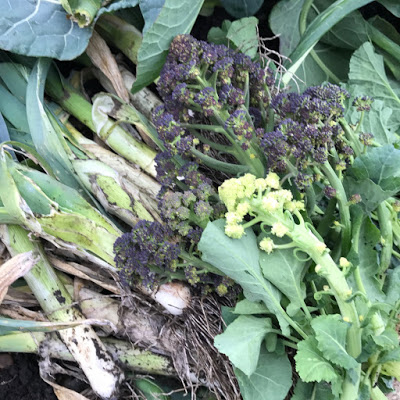
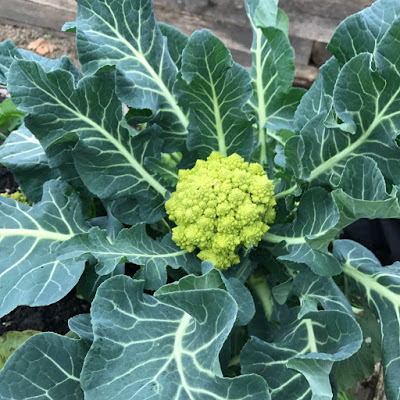
Sprout broccolis and Roman cauliflowers planted last autumn under the net and protected from pigeons have grown beautifully during the winter, and now they are ready to be harvested.
Same for the leeks planted last summer: they may not be as big as the ones you buy at the supermarket, but they are very tasty and... well, very smelly: simply delicious!
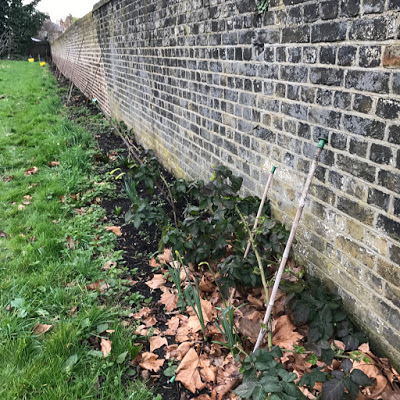
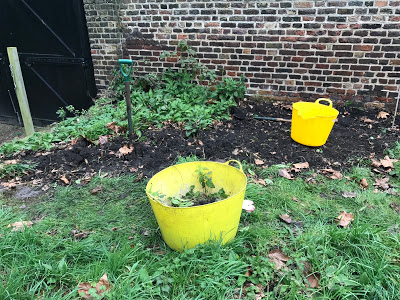
Volunteers have been working hard since last summer digging and cutting all the overgrown weeds that were covering the north wall of the orchard.

North wall: Before (July 2016) and After (March 2017)


North wall work in progress

The area is now tidy and nettle-free (at least we tried) , brambles that had been planted previously now have more room and light to develop flowers and fruits, improving garden's wildlife and providing more berries for us.

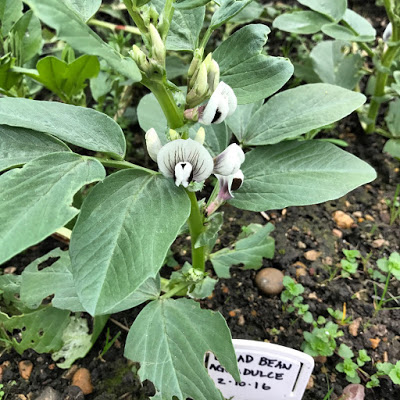
Daffodils, aubrieta, and violets have started to show up, but also broad beans "Aquadulce" planted last October in soil and just protected by a net are flowering.
Speaking of welcomed surprises, our garden coordinator Dorothy is back and that means the Queen's Orchard is now open to the public every Wednesday and week-end until October.
See you soon.


Tuesday, 14 February 2017

7 tips to prune a fruit tree

February: It's time to prune some fruit trees!
It has been a very busy start to the year, but Royal Parks' volunteers have been engaged in some very interesting activity during this short holiday period for the blog.
On 25th January we were lucky to host Ian Rodgers, the Arboriculture Manager of Royal Parks, for a pruning workshop at the Queen's Orchard.
Then on 7th of February, at the Kensington park allotment, we had another workshop with Amy Stone, environmental educator from Bristol.
Personally I think it is nice to listen to the same topic explained by different people, because they can develop the concept with a unique and personal approach, and you can get the best from both.
Speaking about pruning fruit trees, for example, you can be focus on obtaining the most of the fruits each year: remember, you cannot replace what you are cutting off!
Or you can take a long term view of a plant's growth and try to experiment and learn what to do year after year.
I think both methods are quite valid, the way to choose between the two approaches actually depends on many factors, but at the base of any approach you must know some fundamental rules.

1. One at the Time
Every species has a right time for pruning to take place: for example the Prunus family (cherries, plums, nectarines, apricots, almonds. See the first picture above) can not be cut in winter because they are easily exposed to Silver leaf and other diseases. The right time for pruning these species will be in summer after fruiting.

2. Look for DDD:
Take a good long look at your plant before starting to cut, can you see any Diseases, Dead or Damaged branch? They should be the first things getting cut.
In order not spread diseases from a plant to another use always clean your tools; rusty and unsharpened secateurs can be cleaned with specific disinfectant and a honing stone.

3. Get in Shape
A good shape means an healthy tree.
You want a well aerated crown where every branch can get the right amount of air and sun light. So branches that are growing toward the centre of the crown, crossing or simply sticking too close to each other, should be removed.
Also watch out for branches growing too close to the soil and stolons (suckers) at the base of your tree: they make the plant more vulnerable from pest attacks and steal energy from the main stem.

4. Stimulate growth
Usually apical buds, those at the tip of the branch, are "dominant", that means they are more developed than lateral buds and they release a hormone that prevent lower (axillary) buds from growing. They are usually floral buds that will develop flowers and fruit rather than leaves.
When the apical bud is removed the lower dormant buds are stimulated and develop new floral buds. This helps to rejuvenate the plant and maximise the production of fruits.
5. Chose the direction
Observe the position of the buds on the branch you want to cut. Try to maintain those that are growing in a convenient direction, i.e. those growing opposite to the centre or to other branches/barriers.
The position of the bud is also significant if you want speed the growth up of your tree or if you want to reduce it. Leaving the buds that are facing the soil will slow the downward growth of new shoots, because the hormones of growth tend to be on the upper side of the branch.

6. Not too close, not too far
Now you have chosen the exact point you are going to trim off, but be careful about the distance between the bud and the portion of the stem you are cutting: the bud can be easily damaged if the cut is too close to it, but on the other hand it can trap water and cause rotting if you cut it too far.
7.Get the angle right
Last but not least: the angle of your cut should be about 45ยบ in the same direction of the bud. Water will then just glide away from the bud without penetrating inside the wound.

That's all, I hope these simple rules can help you when pruning your fruit trees; please let me know if I have forgotten to mention something important in the comments and I will follow them up.

Tuesday, 20 December 2016

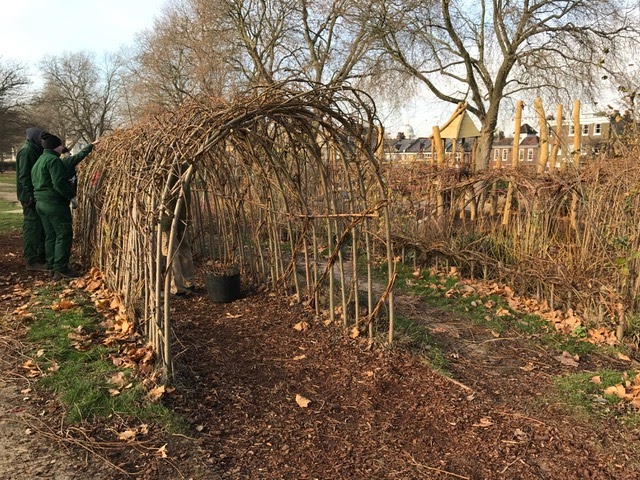
Willow weaving workshop

IMG_0238.JPG
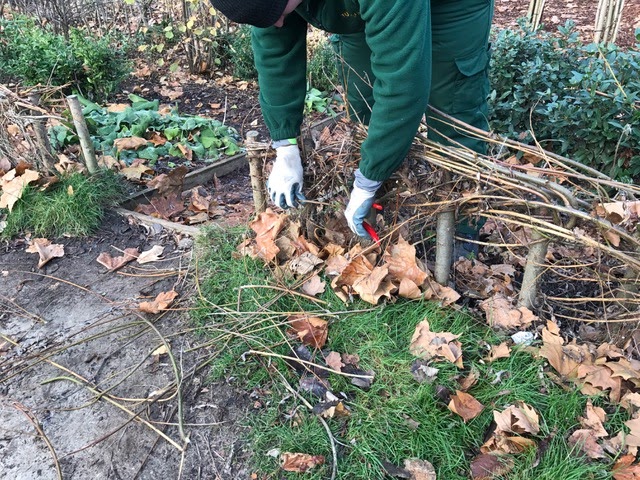
On 1st of December the Royal Parks gardeners plus some of the Queen's Orchard volunteers attended  a Willow weaving workshop hosted by James Buchanan.
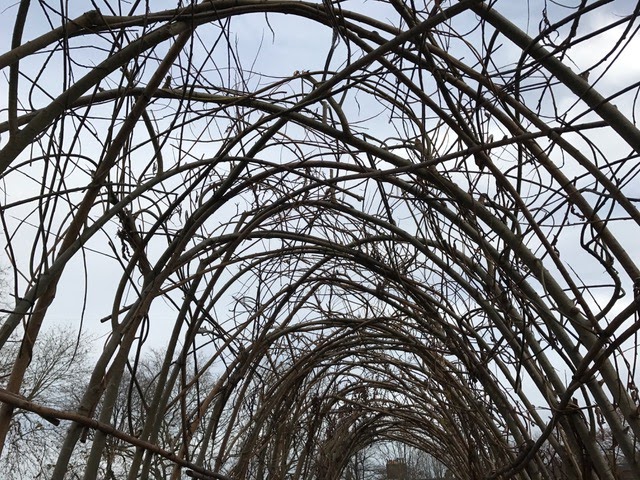
The "mission of the day" was pruning and tiding up the willow tunnels James created in the playground area of Greenwich Park two years ago.
Working with alive plants means to control and check their growth in a way that supports and strengthens the structure every once in awhile.
IMG_0240.JPG
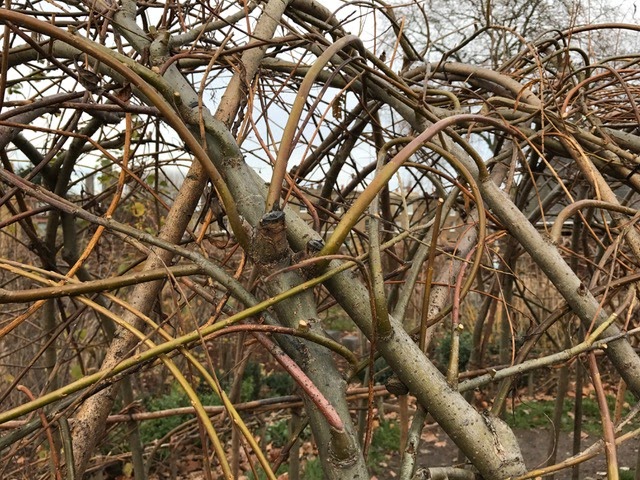
Autumn or winter are the best periods for pruning and arranging the new shoots to tidy up the shape of a living willow tunnel because the plants are dormant and removing the tip branches does not encourage the growth of other shoots until the following Spring.
As the willow has quite flexible branches and relatively thin, the weaving requires bending the young shoots among the pre-existent structure and tying them to the other branches avoiding to break them.
IMG_0305.JPG
In order to strengthen the structure, the pruned hazel branches are weaved within the existing willow branches or as a base for the fences.
IMG_0307.JPG
IMG_0303.JPG
Despite the chilly weather, it was actually a very engaging bright day. A big thank you to all the people attended the workshop and especially to James Buchanan for sharing his experience and knowledge with us.
IMG_0227.JPG

Saturday, 19 November 2016

Some pictures from the Harvest Festival

DSC_7045.NEF
Days have become shorter, sun lower and our activities at the Queen’s Orchard are slowing down: the three signs of winter.
But looking back at the beginning of October, we cannot be disappointed about our Harvest Festival. We had a lot of visitors, fun activities involving children and families, bees and honey workshop and, last but not least, delicious vegetables and fruits.
I would like to share photos of that day with you. They were taken by Lee Yoong, volunteer and awesome photographer too! I hope these pics help you keep you warm and happy all winter long.

DSC_7014.NEF

DSC_7003.NEF

DSC_7013.NEF

DSC_7010.NEF

DSC_7029.NEF

DSC_7069.NEF

DSC_7064.NEF

DSC_7077.NEF

DSC_7052.NEF

DSC_7081.NEF

Friday, 21 October 2016

Apples Day

Today we celebrate the National Apple Day showing some pictures of the apples from the Queen's Orchard: here there are different varieties grown as "dwarf size" trees. Enjoy!
Photo credits: Lee Yoong
Bramley Seedling

Tuesday, 27 September 2016

Get ready to the Harvest Festival 2016

Harvest Festival 2016

The Queen’s Orchard in Greenwich Park

Sunday 2nd October

11:00am to 4:00pm

You are invited to come and see the fruits of our endeavours and discover The Queen’s Orchard - a hidden gem in Greenwich Park close to Maze Hill train station.

AppleAmbassy.jpg

• There will be a representative from The Royal Parks Guild, who can answer any questions you have on food growing;

• You can enjoy some short talks about Bees together with some honey tasting and candle making, given by Camilla of Capital Bees;

• An arts and craft stand run by Ginger Cat, will have children's activities such as face painting, and activities relating to being in an Orchard, and will be coming along with The Royal Parks Bear.

• There will be a chance for the children to get involved in some pond dipping which will be run by our education providers, Field Studies Council. Visitors will be able to take part in the big dig of the potato crop.

• There will be a display demonstrating the range of seasonal vegetables you can grow at
different times in the year e.g.: peas, brassicas etc.

• The Orchard Garden, now in its fourth season and run by a number of volunteers, who will be giving out lavender bags to take home for a donation. Donations to The Queen’s Orchard will be gratefully received and help to fund essentials like seeds and equipment.

So come and join us for a great day out - it's all free!

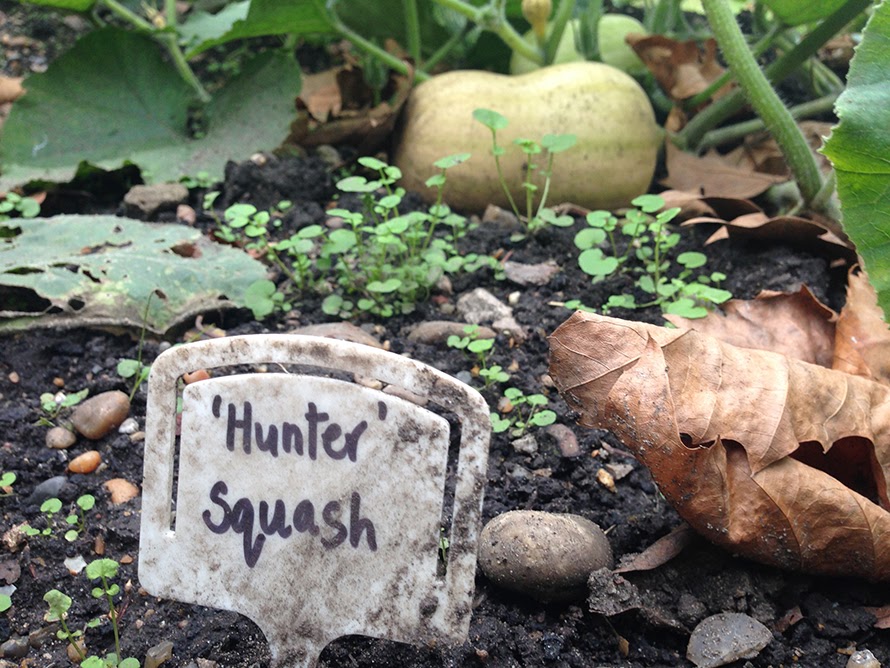
HunterSquash.jpg

The Queen’s Orchard Allotment is located in Greenwich Park – beside the children’s playground. MAP HERE

Thursday, 7 July 2016

Strawberry Time

It's time for strawberries picking!
We have been busy every week since the beginning of June choosing the reddest, freshest, and juiciest strawberries from one of our raised bed around the formal pond.
The garden strawberry is a very easy plant to grow even if you don't have a large space, a pot on your balcony can be a suitable home for it. Direct sunlight exposition and daily watering are the best ways to grow this plant and get its sweet and pretty scarlet fruits.
Actually strawberries are not just red! We have white berry plants with just tiny red dot seeds on the surface of each fruit. This special quality of strawberry has smaller fruit than a common strawberry and it is know as "Pineberry" because of its pineapple-like flavour.
If you feel inspired by this tasty fruit why you don't try one of the recipes of  Pebble Soup' s blog?

Rhubarb-Strawberry Meringue Pot


Ingredients

450g rhubarb cut into 4cm/1½in chunks
Golden caster sugar
About 10 strawberries halved & tailed
2 eggs separated

Method

1. Put the rhubarb in a saucepan sprinkle over 50g/2oz of the sugar and stir together. Cook for 20 minutes until tender.
2. Allow to cool slightly. Stir in the strawberries then the egg yolks. Divide the rhubarb mixture between four 175ml/6fl oz ramekins. Put on a baking sheet and cook in the oven for 10 minutes until lightly thickened.
3. While the rhubarb is cooking, whisk the egg whites until stiff. Sprinkle over half of the remaining sugar and whisk again. Gently fold in the rest of the sugar. Pile the meringue on top of the rhubarb to cover it completely and swirl the top. Return to the oven for 10 minutes until the meringue is puffy and golden. Serve immediately.

Wednesday, 6 April 2016

Seeds for a new season.


Freezing days are almost over and the Queen's Orchard is ready for a new season of plants, flowers, fruits, and visitors!
Purple and pink Aubrieta flowers are blooming like a colourful pillow around the "formal" pond follow through some white and red tulip. On the little hill in the middle of the Orchard grass and wild flowers such as the yellow Cowslip have started to show up.
It may be the right time for wearing gloves and gathering some new nettle (urtica dioica): you can use it for cooking delicious plates like omelette, risotto or soup. Wash it and chop it, but make sure to protect your hands with gloves or keep docks leaves nearby!
Something you also do not want to forget in April is seeding new vegetables indoor the glass house and outside in beds protected by net and wooden sticks to prevent birds and foxes damages.
Fancy a visit to the Queen's Orchard? The gate is now open to visitors and it will be until October three days a week - Wednesday, Saturday, and Sunday - more info HERE.